AT A GLANCE
Start with what matters to your visit.
- Start near your White Town base
- Use regional breakfast ideas as an invitation to ask
- Read a menu through ingredients and preparation
A good food day in Pondicherry begins with curiosity and leaves room for appetite. You do not need to collect a long list of famous dishes or travel across town for every meal. A few considered choices, a current recommendation and enough time to enjoy the table can make the experience more personal.
This guide starts with the hotel’s published MIRA information and offers a way to ask useful questions about food beyond it. It does not present outside restaurants as personally inspected by a named staff member. Where a local suggestion is important, ask the hotel team what they currently know and confirm the details directly with the establishment.
Start near your White Town base
Before choosing a restaurant, look at how the meal fits the day. An early outing may call for a simple breakfast plan; a long arrival journey may make a nearby dinner more appealing than another transfer. Start with your energy, your party and the time available. The right first meal is often the one that lets everyone settle into the stay without rushing or making several new arrangements at once.
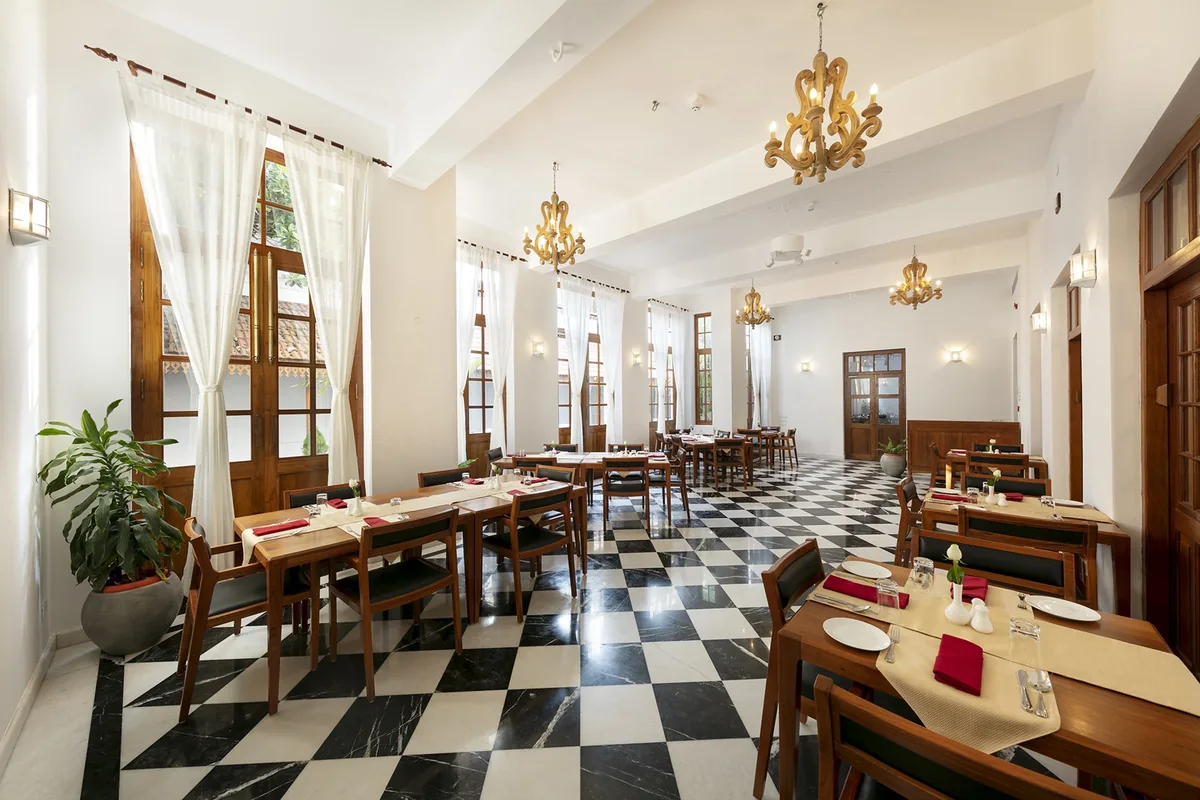
At Grand Hotel D’Europe, MIRA provides the hotel’s own dining starting point. Its published descriptions introduce Restaurant, Courtyard, Bar and Rooftop settings. Review the MIRA page and original photographs, then ask about the current menu and operating arrangements. Knowing what is available at your base gives you a useful fallback while you explore other food ideas, particularly on a day when weather or transport changes the plan.
Use regional breakfast ideas as an invitation to ask
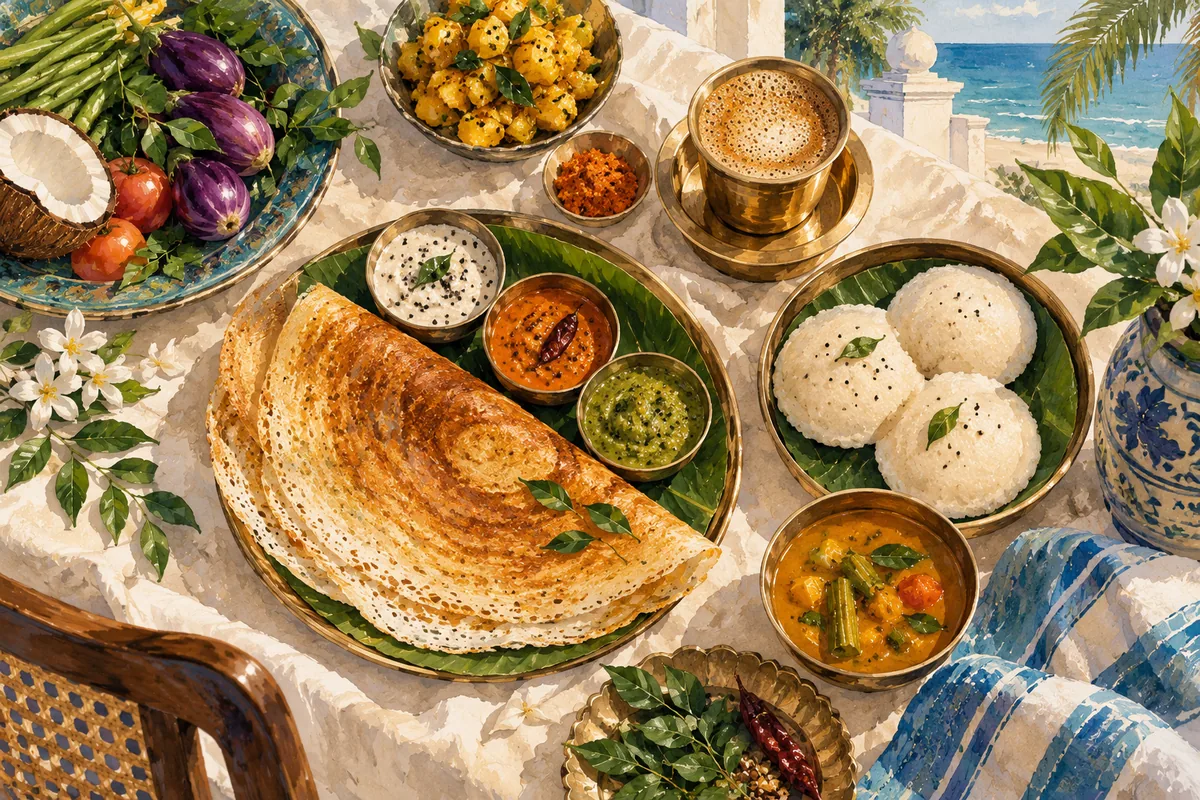
Dosa, idli, chutneys and filter coffee can be useful starting points when you want to explore South Indian breakfast traditions. Treat those names as conversation prompts rather than a checklist that every restaurant must fulfil. Ask what is prepared that morning, how it is served and whether the portion suits the meal you want. A short explanation can make an unfamiliar choice easier to enjoy than ordering several dishes simply because they appear on a travel list.
The illustrated food cover is inspiration rather than a photograph of a confirmed MIRA menu. If a particular breakfast matters to the stay, ask the hotel specifically about it. Guests departing early should check service timing and any available alternative in advance. Do not build a tightly timed excursion around an assumed breakfast arrangement, and do not infer that a room booking includes every food or beverage shown in a dining image.
Ask for a recommendation that matches your meal
A request such as “somewhere for a light lunch close to our next stop” is easier to answer than “the best restaurant in Pondicherry”. Tell the hotel your budget range, preferred meal, dietary needs and willingness to travel. Explain whether you want to sit down for a long time or make a short stop. A useful suggestion should suit the situation, not merely repeat a popular name.
Ask why the place is being suggested and whether the information is recent. If the team has not checked something lately, that is useful to know. Confirm the establishment’s opening, menu, booking requirements and location directly before making a special journey. This guide does not rank outside restaurants or attach a personal-inspection claim to them. It gives you a method for getting a current answer that fits your own day.
Separate food preferences from dietary requirements
A preference for lighter food, a dislike of one ingredient and a requirement concerning preparation are different conversations. Describe each clearly so the restaurant can respond to the correct issue. When something must be excluded, name it instead of relying on a general label. Ask the team who can confirm the relevant ingredients and preparation, and whether a proposed change is actually possible for the dish you have chosen.
Do not use a photograph, a cuisine description or this travel guide to decide whether a meal meets a particular dietary requirement. The restaurant needs to answer for its own menu and kitchen. Our dietary enquiry guide offers a practical communication checklist. It is intended to make questions clearer, not to provide a medical assessment or guarantee an outcome. If an answer remains uncertain, do not reinterpret that uncertainty as confirmation.
Leave space between meals and outings
Try building the day around one food experience you particularly want to enjoy, with other meals kept simpler. A leisurely lunch may make a long afternoon excursion less appealing; a late dinner may make a very early start the following morning less comfortable. Consider the rhythm of the whole stay rather than evaluating each meal separately. Keep coffee and snack stops optional so they can follow appetite and energy.
Pair food with nearby plans where possible, and allow for returning to the hotel to refresh. In rain, check which dining settings are operating before leaving. On departure day, tell the restaurant about a fixed transfer time and choose an arrangement it can realistically support. The rainy-day guide and slower White Town itinerary can help you avoid a day dominated by unnecessary journeys.
Turn food curiosity into a manageable plan
Write down one thing you would like to learn about food during the stay. It might be understanding an unfamiliar breakfast, comparing two cooking styles on the current menu, or simply enjoying a meal outdoors if conditions suit. The question should be small enough to answer during one enjoyable occasion. This keeps curiosity practical and avoids making claims about culinary history or authenticity that a menu alone cannot establish.
Then decide what can remain flexible. Perhaps breakfast depends on the morning’s departure time, while dinner is the meal you want to reserve. Perhaps an outside suggestion is optional, with MIRA considered after confirming its current arrangements. Keep the relevant address and contact details together, particularly when different people in the party are making suggestions. A clear plan is one everyone understands, not necessarily the one with the most stops.
After a meal, remember the detail you actually enjoyed and use it to guide the next choice. You may discover that a lighter lunch suits your walking plans or that everyone appreciates a longer evening at one table. Those observations are more useful than forcing the next day to follow the same pattern. Leave space for changing appetite, weather and the recommendations that become available while you are there.
Make the meal personal without overplanning it
You may remember the explanation of an ingredient, the conversation around a shared dish or the moment everyone finally relaxed more than the number of restaurants visited. Ask a thoughtful question, try something that genuinely interests you, and leave time to appreciate it. You do not need to make every meal a research exercise or turn a weekend into a competition to cover the longest list.
If you are arranging an anniversary dinner or a meal for visiting friends, share the details with MIRA early and confirm the practical agreement. Ask about the current setting, menu, cost and any additional arrangement rather than assuming a package. Keep original hotel photographs separate from conceptual illustrations when judging the real experience. For the latest information, contact the hotel team and use their response to shape the plan for your actual dates.
USEFUL ANSWERS
Before you make plans.
Is this a personally tested list of outside restaurants?
No. The guide uses the hotel’s published information and provides a way to ask for current local suggestions. Confirm the reason for a recommendation and its current opening and menu directly before travelling for it.
Are all illustrated breakfast dishes available at MIRA?
The cover is an AI-generated regional food illustration. Ask for the current menu and any breakfast arrangement relevant to your booking; an image does not confirm an included dish or service.
How should I ask for a food recommendation?
Give the meal, budget, location preference, available time and dietary requirements. A specific request lets the team suggest something suited to the occasion and explain what information it currently has.
Can I rely on a general menu label for a dietary requirement?
Ask the restaurant about the relevant ingredients and preparation directly. This travel guide cannot confirm whether a particular dish or kitchen arrangement meets your requirements.
SOURCES & EDITORIAL NOTES
Plan with the right information.
Editorial update: 4 November 2026. Hotel details draw on the published pages below. Follow the linked official visitor sources for current access instructions, and confirm date-specific hotel arrangements directly. Suggested itineraries are planning ideas.
YOUR WHITE TOWN STAY
Make the next step personal.
Share your dates, party size and practical requirements with the hotel team. Ask for the arrangements and total quote that apply to your visit.
Compare rooms ↗Discover MIRA ↗Contact the hotel ↗