AT A GLANCE
Start with what matters to your visit.
- Begin with the address rather than a grand claim
- Give the archive a few attentive minutes
- Read the building you can actually see
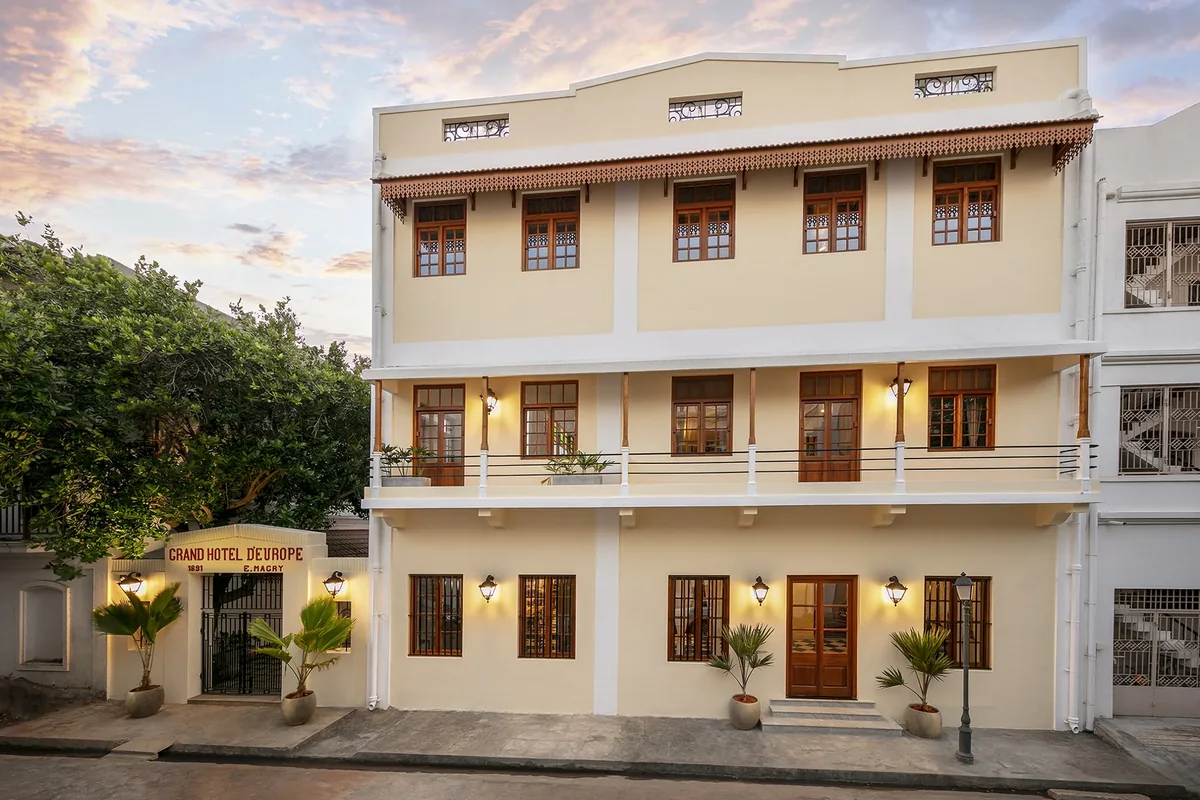
A heritage hotel is most interesting when its history helps you notice the place in front of you. At Grand Hotel D’Europe, that begins with an address: 28, Rue Suffren, White Town, Puducherry. The hotel’s published history records its establishment in 1891 by E. Magry and its continuing connection with this street. Those details give a visit a starting point, without requiring you to imagine that everything visible today dates from the same moment.
This guide suggests how to make that story part of an actual stay. Read a little before arrival, look closely at the present-day spaces, and use the archive to ask better questions. Leave room for the ordinary pleasures of hospitality too: a comfortable room, a meal, a quiet pause and an unhurried return after exploring Pondicherry.
Begin with the address rather than a grand claim
The hotel’s own history identifies 1891 as its founding year and E. Magry as its founder. Rue Suffren is the thread connecting that account with today’s hotel. When planning your visit, keep the street address alongside the name: it helps you place the hotel within White Town and recognise the location when arranging a transfer. Historic names can appear with different spellings or accents, so an address is often more useful than relying on a name alone.
A founding date tells you when a hotel’s story began; it does not automatically date every wall, doorway, piece of furniture or photograph. Buildings adapt, rooms change use and hospitality evolves. Approach the date as an invitation to explore the record, rather than a promise that the present-day property is an unchanged scene from the nineteenth century. The hotel’s history page provides the fuller account, photographs and archival presentation that support this introduction.
Give the archive a few attentive minutes
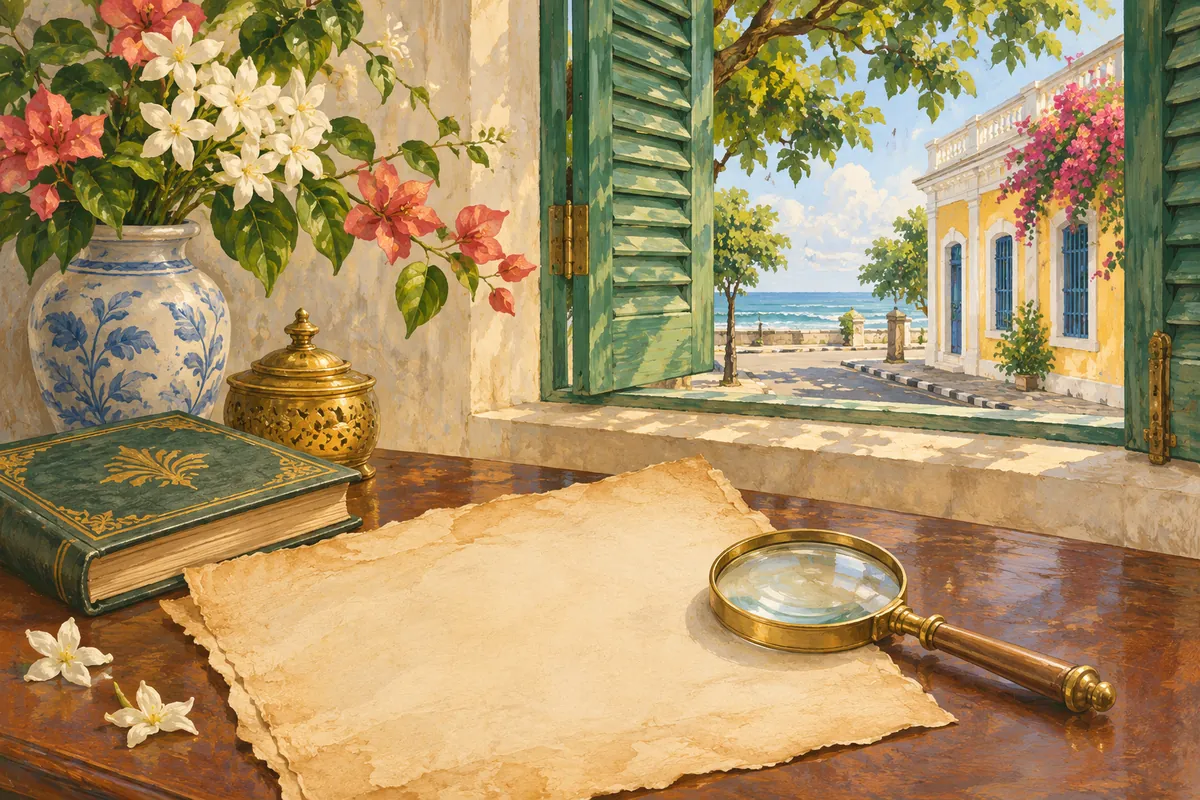
Before setting out around town, open the hotel’s archival storybook. It brings together handwritten material, stationery and photographs supplied by the hotel. Look at one object at a time. A letterhead may tell you how an establishment presented its identity; handwriting can reveal the personal scale of correspondence; a group photograph may preserve a gathering that would otherwise be easy to overlook. These are different forms of evidence, with different things to offer a reader.
Start by describing what is visible before deciding what it means. Notice an illustrated building, the arrangement of a table, a person’s posture or the texture of a document. Where names or dates are not established, leave them open. The hotel’s archive notes that individual identities and photograph dates are not independently verified. That does not make the material uninteresting; it simply means the pleasure of looking should not become an invented biography or an unsupported date attached to an image.
Try a small archive-reading exercise: choose a single document and note its visible name, image, handwriting and any clearly legible date. Then separate those observations from the questions they raise. Does the stationery show a street address? Is the photographed room identified, or only visible? Is a handwritten date attached to the document itself, or supplied in a later caption? You need not resolve every question during a stay. Recording the distinction gives you a more reliable memory and a useful starting point if you later ask the hotel about the object.
Read the building you can actually see
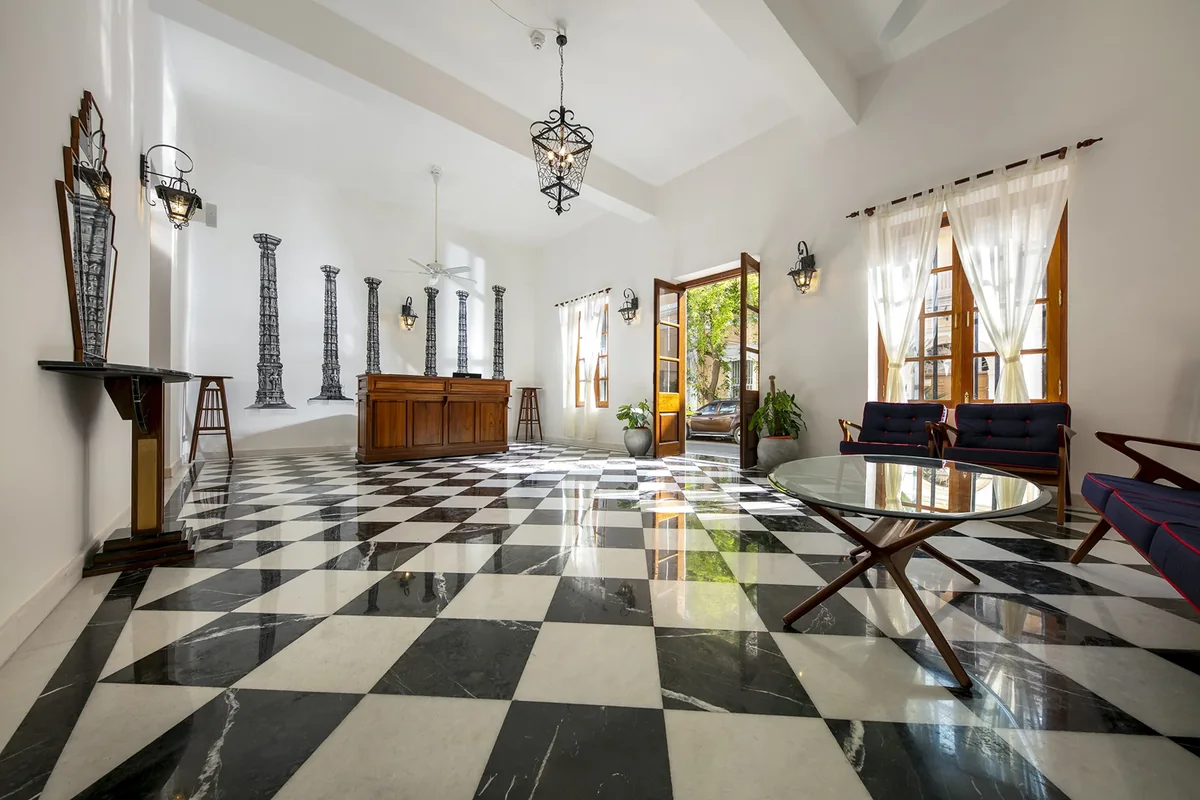
The present-day hotel photographs offer another kind of introduction. Look for timber details, patterned surfaces, tall openings and shaded passages. Consider how the spaces guide movement from arrival to a room, from an interior to a shared area, or from a corridor to a place to pause. You do not need architectural training to notice how light falls differently across a floor at different times, or how a doorway frames a view of the next space.
Use those observations as questions rather than automatic historical conclusions. A tile pattern can be beautiful without your needing to call it original. A timber element can give a room character without establishing when it was installed. If the age or provenance of a feature particularly interests you, ask the hotel whether it has information about it. A careful question is more rewarding than assigning a style or century from appearance alone. Our White Town architecture guide develops this approach for exploring nearby streets.
Follow the Mother’s visit through its sources
The hotel’s heritage presentation includes an account of Mirra Alfassa, known as the Mother, staying at Hôtel d’Europe on Rue Suffren during her first Pondicherry visit in 1914. The hotel attributes the stay reference to a published biography by Georges van Vrekhem, while the Sri Aurobindo Ashram’s institutional biography supplies wider background on her life and arrival. Reading those references together separates the hotel connection from the larger spiritual and historical story.
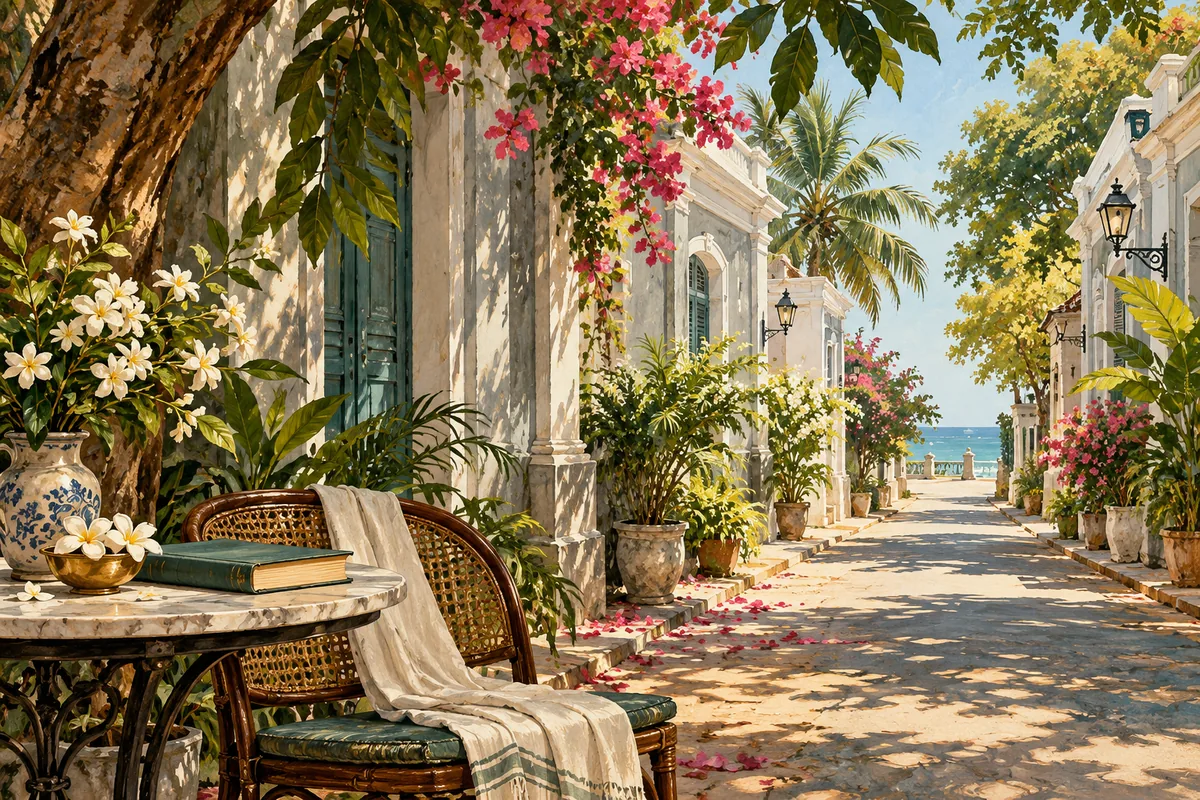
Visit the illustrated Mother’s stay chapter for the account and its research links. Its modern sketches are clearly identified as interpretations based on present-day imagery, not archival views of the hotel in 1914. No specific room, daily routine or private conversation is established by this guide. That distinction keeps a memorable connection meaningful: you can appreciate a documented address without filling the spaces in the record with attractive but unsupported detail.
Choose a room for the stay you want now
History can influence the feeling of a trip, but your room still needs to suit the people travelling. The hotel publishes 18 rooms across the Heritage and Grand collections, with King and Twin options. Begin with the current room descriptions and photographs, then compare space, bed configuration and the arrangements your party needs. A heritage preference should complement practical comfort rather than replace questions about occupancy, luggage, access or the total booking price.
Tell reservations your dates, adult count and children’s ages, together with any specific requirements. Ask which category is suitable and what is included in your quote. If you hope for a particular photographed room or architectural feature, request it directly and wait for confirmation. A category name does not guarantee every visible detail in a gallery photograph, and an old hotel story does not determine present-day room allocation. Clear expectations leave you free to enjoy the property when you arrive.
Build a heritage day with a comfortable rhythm
A useful heritage day can be simple. Read a short part of the hotel’s history, take a comfortable walk through White Town, and choose one additional stop that interests you. It might be a museum, a bookshop or a quiet visit planned through official visitor information. Allow time to sit, eat and return without rushing. The purpose is to notice more, not to cover every possible landmark before lunch.
Check the weather and opening arrangements for the places you choose. Keep indoor alternatives ready if heat or rain changes your plans. A museum’s closure day, a special observance or a difficult crossing can matter more than an itinerary’s elegant sequence. The hotel’s Pondicherry guide provides starting points, while the rainy-day article helps you keep the day flexible. Suggested routes are invitations to plan, not assurances of access or an exact walking time.
For a mixed-interest group, give everyone a small role: one person notices doorways, another follows the written history and another chooses a comfortable place for lunch. Compare observations afterwards. This approach makes heritage welcoming to people with different levels of interest, and avoids asking every companion to spend the same amount of time on each photograph or historical passage.
Take photographs that keep their context
If you enjoy photography, choose a detail and spend time understanding its setting. A frame might include the relation between a doorway and the corridor beyond, or the way shade changes the colour of a surface. Ask before photographing other guests, staff, private areas or archival material at close range. Keeping people’s comfort in mind is part of being a thoughtful visitor, especially in a working hotel where daily life continues around your interest.
When sharing a photograph, describe what you know: the hotel’s name, the present-day space and the date of your visit. Avoid presenting it as proof of how a room looked in 1891 or 1914. If sharing a historic image from an authorised source, retain its attribution and any uncertainty about its date. A short, accurate caption usually tells a better story than an elaborate claim the photograph cannot support.
Let the history enrich ordinary moments
Not every moment of a heritage stay needs to become research. After looking through the archive, return to the present: a conversation, a comfortable seat, a meal at MIRA or time to read. The hotel’s ongoing hospitality is part of its story too. Looking carefully can make a familiar movement through a corridor or a return from the street feel more connected to the place, without turning the visit into a test of historical knowledge.
Before booking, settle the practical details through the hotel team: arrival time, room suitability, dining arrangements and any essential access requirement. During the stay, ask one or two questions that interest you rather than expecting every person to be an archivist. Leave with the details you genuinely noticed and the sources you want to read later. A useful heritage experience offers a clearer sense of place, together with enough curiosity for a future visit.
USEFUL ANSWERS
Before you make plans.
Does the 1891 founding date mean every feature is original?
No. The founding date marks the beginning recorded in the hotel’s history. It does not establish the installation date or provenance of every present-day building feature, furnishing or photograph.
Where can I explore the hotel’s archival material?
The website’s History page presents the hotel-supplied archive and explains its limits. Start there, then ask the team whether further information is available about an object that interests you.
Does this guide identify the Mother’s room?
No. The published hotel account refers to her stay at the Rue Suffren hotel; this article does not assign an unverified room number, routine or length of stay.
How should I choose a room for a heritage visit?
Compare the current category descriptions and actual photographs, then confirm occupancy, beds, price and any essential requirement directly with reservations.
SOURCES & EDITORIAL NOTES
Plan with the right information.
Editorial update: 4 November 2026. Hotel details draw on the published pages below. Follow the linked official visitor sources for current access instructions, and confirm date-specific hotel arrangements directly. Suggested itineraries are planning ideas.
YOUR WHITE TOWN STAY
Make the next step personal.
Share your dates, party size and practical requirements with the hotel team. Ask for the arrangements and total quote that apply to your visit.
Compare rooms ↗Discover MIRA ↗Contact the hotel ↗