
AT A GLANCE
Start with what matters to your visit.
- Begin with one question and a manageable loop
- Look at how a building meets the street
- Follow light, shade and shelter
White Town becomes more interesting when a walk is organised around what you notice rather than how many photographs you collect. A doorway, a shaded edge or a change of material can prompt a useful question about how a building meets the street. You do not need to identify every architectural style to enjoy looking carefully. Begin with the visible detail, then seek reliable context for the historical conclusions.
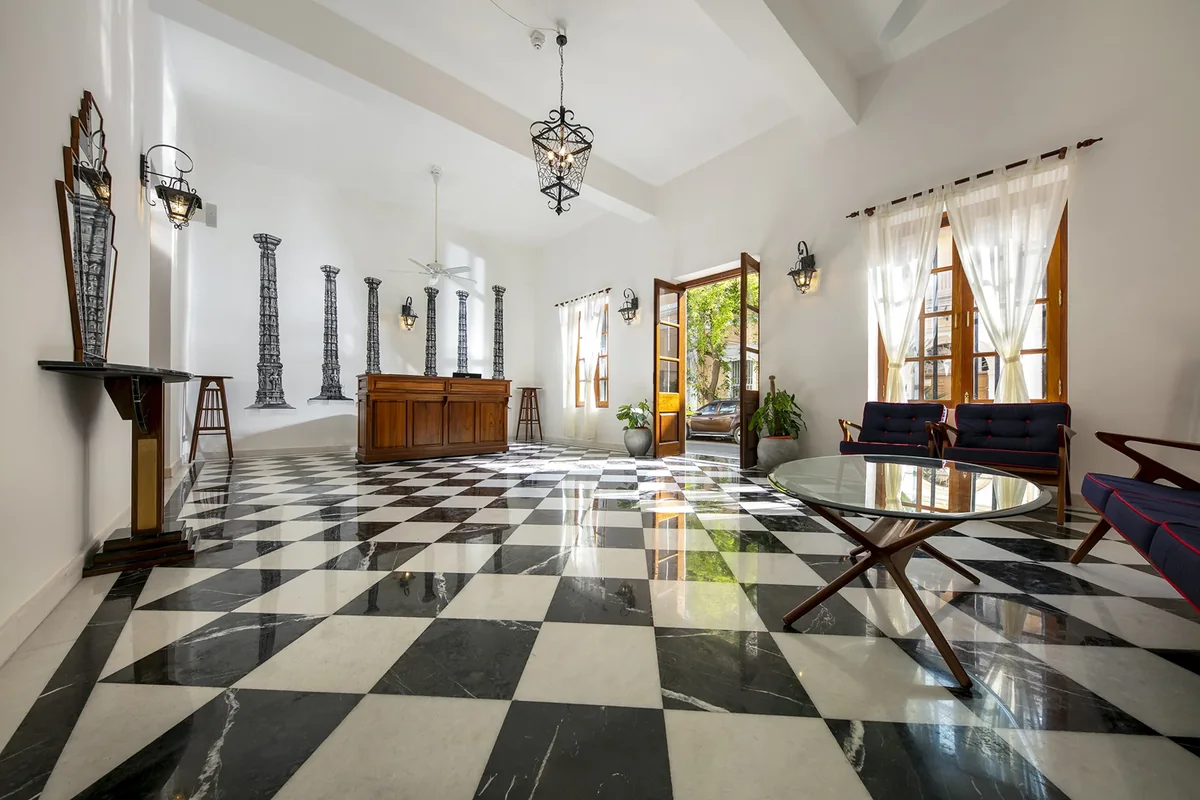
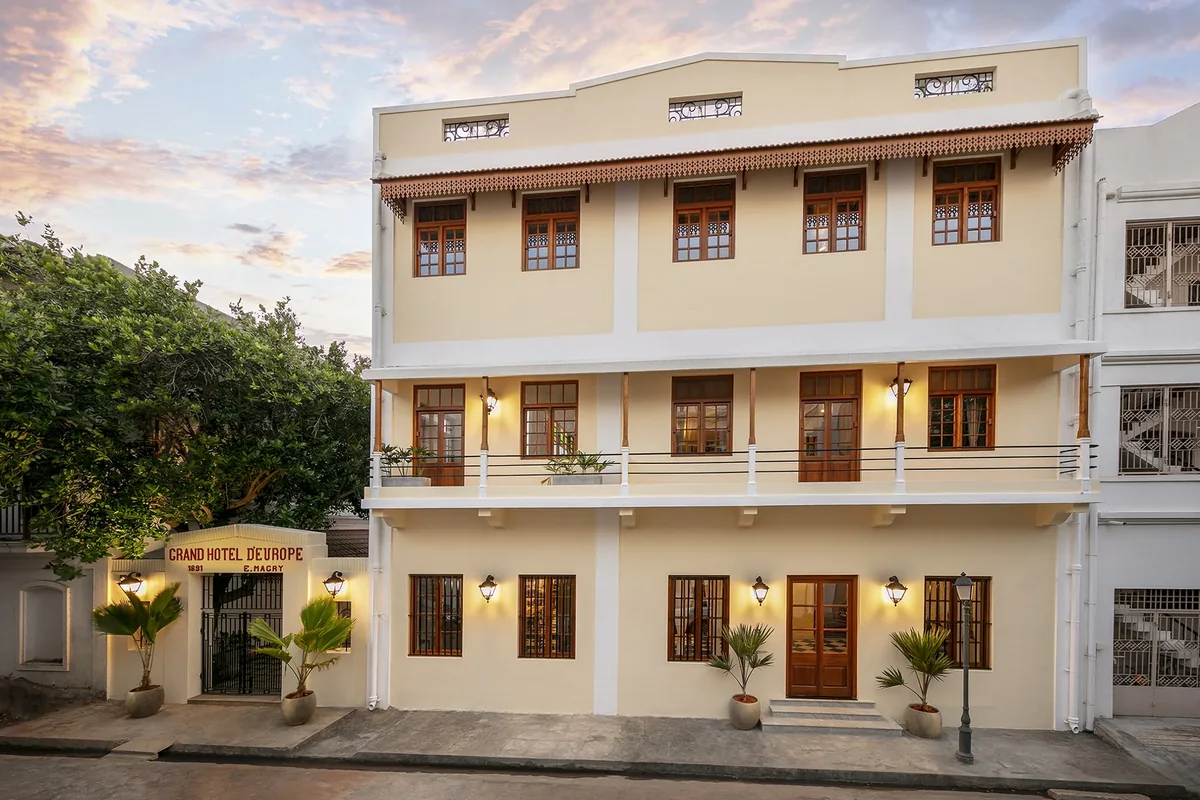
This is a method for a self-guided observation walk, not a surveyed route or a claim that every facade belongs to one period. Start from Grand Hotel D’Europe on Rue Suffren, choose a comfortable loop using a current map and keep your surroundings in view. The hotel’s own spaces and original photographs provide an introduction; the streets outside offer a living setting whose residents, businesses and daily movement deserve equal attention.
Begin with one question and a manageable loop
Choose a question before leaving: how do doors make a threshold, where does shade fall, or what changes between one street frontage and the next? One question gives the walk shape without turning it into an examination. You can notice several examples and compare them instead of needing a new landmark at every corner. Agree a short loop with a clear return point, and keep a café, meal or hotel break available if the weather or energy level changes.
Use a current map to check crossings and the streets you intend to follow. This guide does not promise a particular pavement condition, walking time or step-free route. For a guest unfamiliar with Pondicherry, a shorter walk completed comfortably can reveal more than a longer circuit spent looking for directions. Tell a companion where you intend to go, carry only what you need and stop in a suitable place before reading your phone or making notes.
Choose a turnaround point before you are tired. It might be a junction, a planned stop or a time after which you begin returning. That simple boundary makes it easier to adapt a walk without feeling that unfinished streets represent a failed plan. Looking closely at a small area is a complete experience in itself.
Look at how a building meets the street
Begin at ground level. Notice whether an entrance sits directly on the street, behind a wall, beneath a shaded edge or beyond a small transition space. Observe how a door or gateway changes your sense of invitation and privacy. A threshold may reveal how people move between public and private life more clearly than a distant photograph of an entire facade. Compare two examples and describe their visible differences before trying to explain why they developed.
Respect the boundary you are observing. An open gate is not an invitation to enter a private courtyard, and a visually interesting doorway may still be someone’s daily entrance. Keep clear of access, do not lean equipment against walls, and ask permission if you want a photograph involving a person or private activity. Public observation works best when it leaves the place functioning normally. The interest of a building does not turn it into a display arranged for visitors.
Follow light, shade and shelter
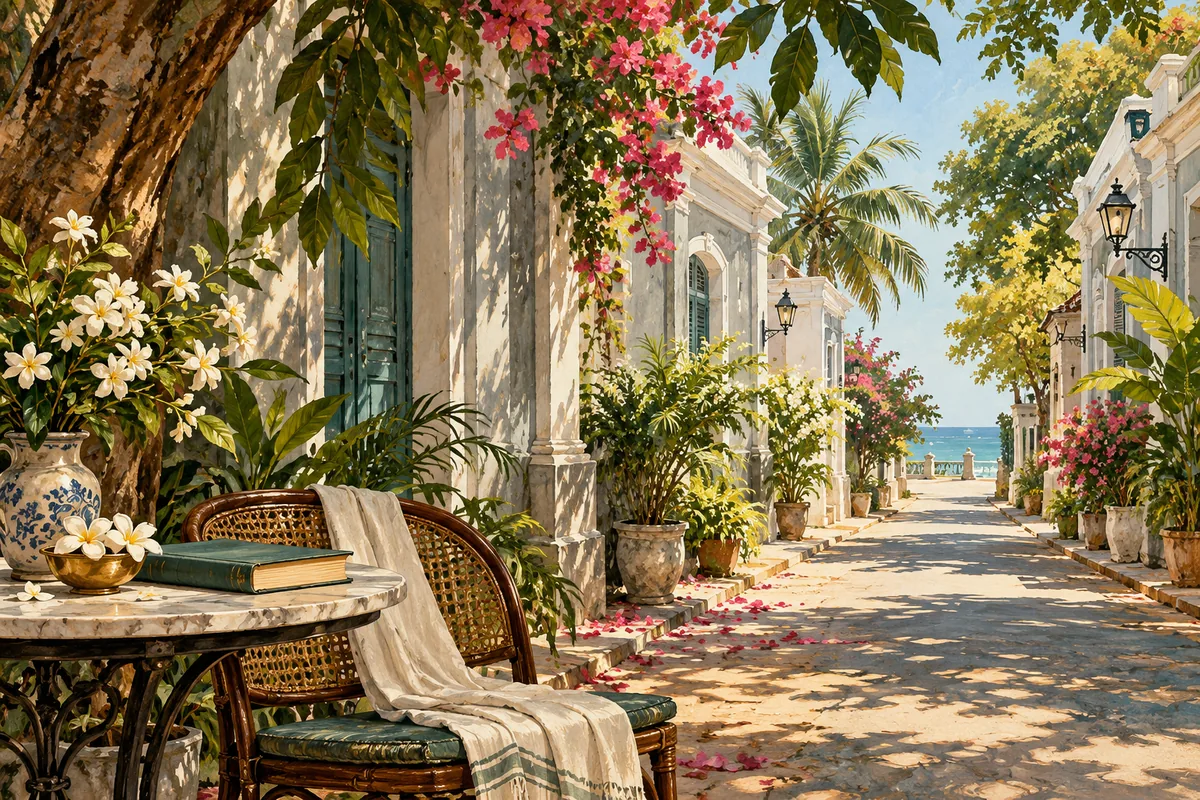
Notice where you instinctively choose to pause. A tree, projecting edge, verandah or deeply set opening may change the feel of a street even before you consciously identify it. Look at how light reaches a doorway and how shade alters the colour of a wall. These observations help you understand architecture as something used in a climate, rather than as a flat arrangement of decorative elements. They also make a walk more comfortable because you begin to pay attention to where rest is possible.
Avoid treating a single visible feature as proof of its age or original purpose. A shaded structure might have been altered, repaired or added; a current arrangement does not explain every earlier use. For historical context, consult an architectural or conservation source such as INTACH Pondicherry, and distinguish that context from your own observation. On the walk itself, a useful note can be modest: what is there, how it feels and what you would like to understand later.
Compare doors, windows and shutters
Choose a small set of openings to compare. Look at proportions, depth, repetition and the relation between a window and the wall around it. Consider whether shutters are open, partly closed or fully shut, without assuming you know what is happening inside. A repeated rhythm of openings can give a frontage its character; one changed opening can reveal how a building has adapted to a new use. Draw a simple outline if that helps you look longer than a quick photograph would.
Keep identification separate from attribution. You may describe a tall timber door or a patterned grille without declaring it nineteenth-century or assigning a cultural origin. Materials and forms travel, and repairs can reproduce older appearances. If you later learn a documented description of a building, return to the photograph with that context. The process of looking first and reading afterwards can be more satisfying than borrowing an attractive architectural label for a feature you have not actually examined.
Read materials and repairs as part of a living town
Look for transitions: plaster meeting stone, timber beside metal, an older-looking surface beside a fresh repair. A town that continues to be occupied will contain maintenance, practical changes and different approaches to finish. Those details can help you move beyond the expectation that heritage must look uniformly weathered or untouched. Ask what a repair allows the building to keep doing, while recognising that you may not know the reason or method simply from the street.
Avoid equating patina with authenticity or new paint with a loss of history. Appearance alone is an unreliable test of either. A conservation decision may involve structural condition, materials and a record not visible to a passer-by. If a feature interests you, record the location and consult a reliable source later. Do not scrape, touch fragile surfaces or remove a piece as a souvenir. Careful observation leaves the material available for the people who use and look after the building.
Notice the languages and everyday signs
Street plaques, shop names, menus and handwritten notices add another layer to the streetscape. Notice which languages appear together, how lettering is arranged and whether the sign identifies a street, business, service or private instruction. These details show present-day use as well as cultural reference. You can enjoy a beautiful plaque while also noticing a practical notice that makes the building work for the people who arrive there each day.
Do not assume every sign or name is unchanged from an earlier period. A photograph records what you encountered on your visit, not the entire history of an address. If you share the image, caption it with that limited knowledge. The hotel’s homepage includes an introduction to reading language in shared spaces; the hotel history page adds a separate account of one Rue Suffren address. Together they suggest how visual detail and sourced narrative can complement one another without becoming interchangeable.
Make photographs that show relationships
Try one wide view, one middle-distance composition and one detail. The wide view explains how a building sits on the street; the middle view can show a threshold or the rhythm of openings; the detail may reveal a texture or join. Keeping those relationships makes a small photo collection more useful than a series of isolated close-ups with no location or scale. Stop somewhere appropriate and stay aware of vehicles, other pedestrians and entrances while framing an image.
Permission and courtesy remain important. Do not aim into private rooms or photograph a person as a decorative part of a heritage scene without considering their comfort. Some places may restrict photography, and an attractive public-facing building can still be a workplace or residence. When a photograph is not appropriate, write a brief description instead. An observation walk does not fail because you return with fewer images; the skill you are practising is attention, not the size of your camera roll.
A useful caption can be built from three elements: the location, the visible subject and the date of your observation. For example, describe a shaded entrance on a White Town street rather than claiming an original colonial doorway. Keep a wider frame alongside a detail so you can later recover the feature’s setting. If you do learn a documented identification, add the source to your notes instead of silently converting your first impression into a fact. This creates a small personal record that remains enjoyable to revisit and more useful to another traveller.
Return with observations rather than a checklist
Back at the hotel, choose three things you noticed and one question you want to pursue. Compare them with the hotel’s original photographs or the material on its History page. You may begin to notice how a shared space, corridor or window makes a place feel welcoming today. The hotel’s published story describes heritage architecture alongside a later Art Deco wing with Chettinad influence; use that wording as part of its account, rather than extending the label to every building you passed.
A good next step is a modest one: read a reliable introduction, ask a specific question or choose a different observation theme on another walk. If you want to explore the Mother’s connection with the address, follow the guide to the historical record. If your priority is the practical stay, compare the rooms and plan a meal at MIRA. An attentive walk should deepen your sense of the town while leaving time to enjoy being there.
USEFUL ANSWERS
Before you make plans.
Is this a fixed heritage walking route?
No. It is a method for looking carefully. Choose a manageable loop using a current map, check conditions and adapt the walk to the people travelling.
Can I enter a courtyard if its gate is open?
Do not assume an open gate gives visitor access. Respect private entrances and ask permission before entering or photographing private activity.
Can appearance establish a building feature’s age?
Not on its own. Describe what you see, then consult reliable architectural or historical evidence before assigning a date or origin.
Where can I start learning more?
The hotel’s sourced history offers context for its address, while INTACH Pondicherry provides a conservation-oriented introduction to the town. Keep documented information distinct from your own observations.
SOURCES & EDITORIAL NOTES
Plan with the right information.
Editorial update: 4 November 2026. Hotel details draw on the published pages below. Follow the linked official visitor sources for current access instructions, and confirm date-specific hotel arrangements directly. Suggested itineraries are planning ideas.
YOUR WHITE TOWN STAY
Make the next step personal.
Share your dates, party size and practical requirements with the hotel team. Ask for the arrangements and total quote that apply to your visit.
Compare rooms ↗Discover MIRA ↗Contact the hotel ↗