
AT A GLANCE
Start with what matters to your visit.
- Make a room plan before a shopping list
- Read room size and occupancy together
- Build a small confirmation folder
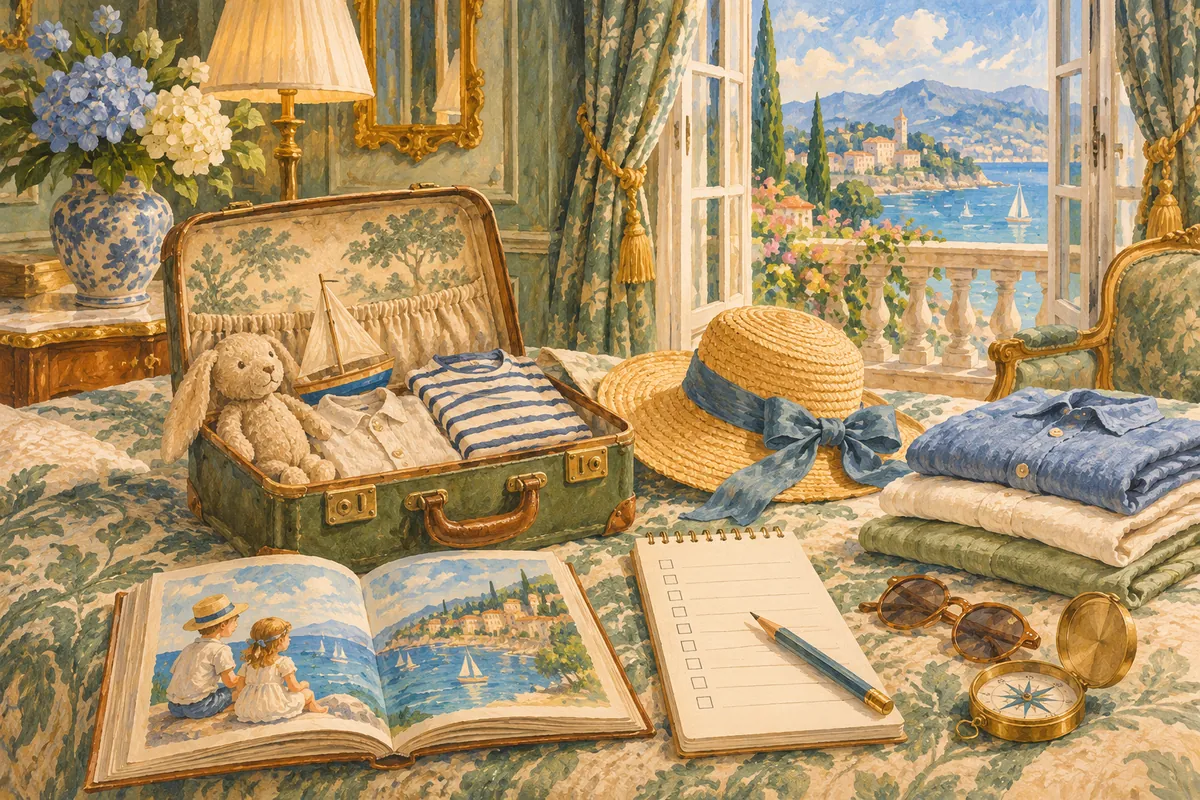
The most useful family packing list begins with a room plan. Knowing who sleeps where, which items you need during travel and what the hotel has confirmed prevents both overpacking and uncomfortable assumptions. A bag full of things that may be useful is less helpful than a clear answer about the bed arrangement, the next meal and how you will manage arrival.
This planner is designed for a stay at Grand Hotel D’Europe in White Town. It combines the hotel’s published category descriptions with a method for organising your own belongings and requests. It does not promise equipment, child amenities or a particular room allocation. Use the questions to establish the arrangements applying to your family before you finalise the booking.
Make a room plan before a shopping list
List every person travelling, their age and the sleeping arrangement they need. Distinguish a preference from a requirement: a preferred bed type is different from a person being unable to use a particular arrangement. If you need two rooms, identify which adults will occupy each one and how the children will be accommodated. This lets reservations assess the actual party instead of trying to infer it from a single total guest count.
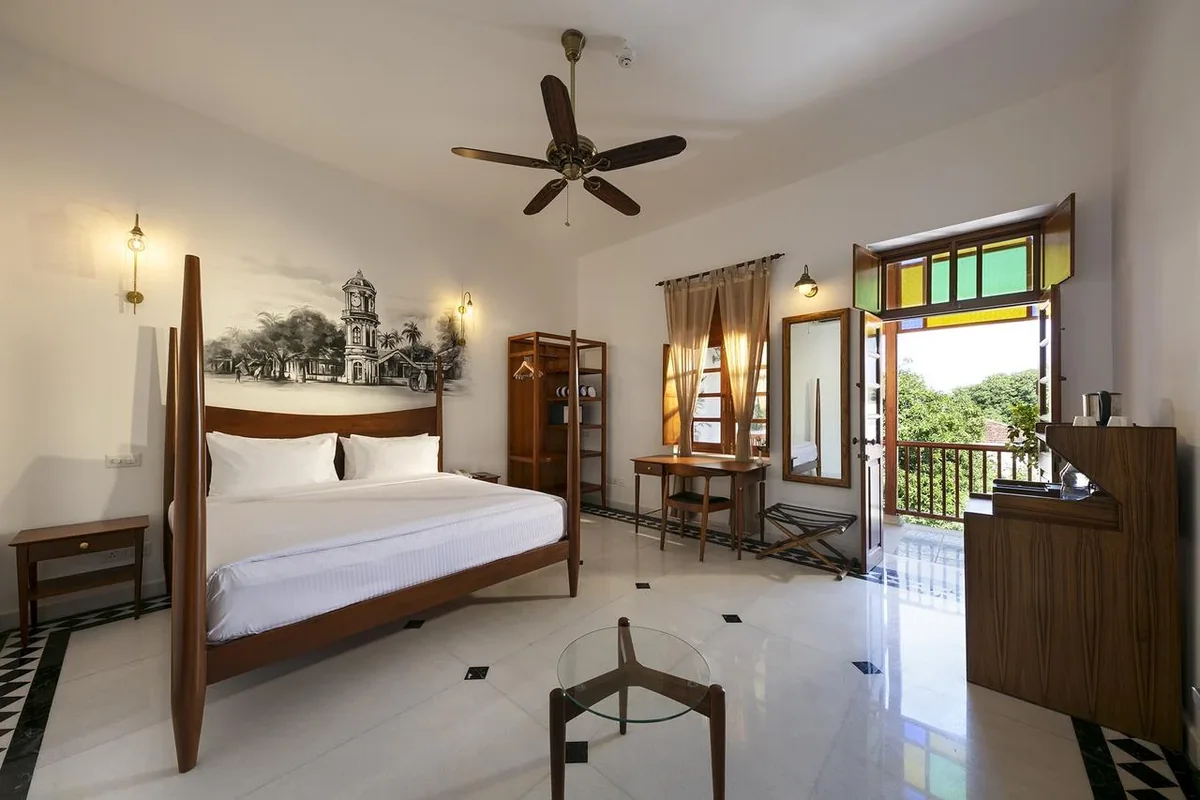
The room page describes Heritage and Grand collections with King and Twin choices. Each category is one guest room. Ask the team to explain the proposed combination in plain terms, including any extra-person or rollaway arrangements. Do not treat a room name as evidence of a separate sleeping area, connecting door or space for equipment. A short written room plan is easier to compare with a quote than several messages containing changing numbers.
Read room size and occupancy together
The published descriptions list Heritage rooms at 300 square feet and Grand rooms at 425 square feet. Heritage occupancy is described as up to two adults and one child under six; Grand occupancy as up to three adults and one child under six. Use these facts to begin the conversation, then share your exact requirements. Square footage alone cannot tell you whether the layout suits your luggage, the people travelling or a particular additional bed.
Look at original photographs and ask practical follow-up questions. Where will the sleeping arrangement be placed? What space remains for moving around? If someone uses a mobility aid or needs help with a bathroom, request details of the relevant room and route. A larger category may offer useful space, but it is not a substitute for confirming a feature you depend on. Compare the complete proposal, not simply which option appears bigger on a card.
Build a small confirmation folder
Keep the booking confirmation, quoted inclusions, contact details and arrival information together. Note which requests are confirmed and which remain subject to availability. This distinction matters when a family plans around an extra bed, an arrival time or access to a facility. A general acknowledgement that a message was received is not necessarily confirmation that every requested arrangement has been accepted.
Add the transport provider’s agreed pickup and the address of the hotel: 28, Rue Suffren, White Town, Puducherry. Keep an accessible copy with the adult coordinating travel rather than in a suitcase that may be difficult to reach. Share only the information each provider needs. Do not place identity-document copies or payment credentials into a general packing note or public conversation. Your goal is a useful travel reference, not a collection of unnecessary personal data.
Pack according to when you need an item
Divide belongings into three groups: the journey, the first hours after arrival and the rest of the stay. Items needed while travelling should be reachable without unpacking the main bag. The arrival group might include a change of clothing and whatever you normally need to settle a child comfortably. The rest can remain packed until the family has had time to arrive, eat and decide how much of the evening to use.
This approach is more useful than giving every item the same priority. If arrival is late, a carefully organised small bag can avoid opening all the luggage at once. If rooms are not yet ready, you still know where the immediate essentials are. Choose the contents according to your own routines; this guide is not a medical packing list. Confirm any unusual storage or equipment requirement directly with the hotel before travel rather than assuming a standard room will accommodate it.
Match clothing and bags to the real itinerary
Choose comfortable clothing and footwear for the activities you have actually selected. A short town walk, a museum visit, a boat journey and a celebration each create different practical needs. Check venue rules and weather close to departure. Avoid packing for every imagined activity if doing so makes transfers and room organisation harder. A smaller number of versatile items may be easier to manage than separate bags for several outings you may never take.
Prepare one light outing bag that can be adjusted each day. Include your family’s normal essentials, water and suitable protection for the conditions. Keep hands as free as practical when supervising children or boarding transport. If something must remain dry, protect it appropriately before leaving. Ask about restrictions on bags at a venue rather than assuming a large day bag can enter every space. The family travel guide helps you choose manageable outings before deciding what they require.
Keep food and routine questions separate from packing
Packing an item and arranging a service solve different problems. If a child needs a particular meal time or dietary preparation, speak to the restaurant; a general preference written in the booking note may not answer that request. Ask about current menus, portion sizes and what can be confirmed for your dates. Do not assume the photograph of a dish establishes ingredients, spice level or suitability for an allergy.
Tell the hotel about requirements early enough for a clear answer. For example, an early departure creates a timing question about breakfast; a group meal creates a question about menu and service. These should not be left until everyone is hungry or the transfer has arrived. MIRA’s dining information introduces the real settings, while the team must confirm the current arrangements. Keep any confirmed answer with your travel documents so the adult handling that part of the day has the same understanding.
Compare the total family cost
Ask for a quote that identifies the room category and the people it covers. Check breakfast inclusion, any additional-person or rollaway charge, taxes and the terms applying to your dates. If two offers differ, look for differences in occupancy, cancellation, meal inclusion or payment conditions before treating one as cheaper. A comparison should describe the same family and the same stay, not two different assumptions about who is included.
Confirm how a change in guest count or a child’s age affects the proposal. Ask how amendments, cancellations and deposits are handled under the actual booking terms. Do not rely on a blog article for a particular refund or free-service promise. A clear quotation reduces the chance of packing and planning around an arrangement the booking does not cover. Save the accepted version and avoid keeping several contradictory screenshots as if all of them remain valid.
Pack for the final morning as well as the first
Before the last evening, decide what must be available during checkout and the journey home. Put travel clothing, documents and immediate essentials where you can find them without emptying a suitcase. Keep a small place for items used until the last moment. Decide who checks drawers and charging points while another adult coordinates the children. A simple division of responsibilities can make departure calmer without turning it into a lengthy checklist.
Confirm the transfer time, luggage needs and any request to remain after the normal departure arrangement with the hotel. Such a request needs a reply; it should not be inferred from a quiet travel day. If you plan an outing before leaving, choose one that can be shortened and leaves a margin. Contact the reservations team with unresolved questions before arrival, then use this planner as a compact reference that supports the stay rather than controlling every minute of it.
Use a final room-and-bag comparison
Before departure, put the confirmed room plan beside the luggage plan. Check whether a large item was packed because you assumed the hotel would need it, or omitted because you assumed the hotel would supply it. Resolve the important uncertainty directly. This is especially useful for anything that affects sleeping, moving around the room or settling in after arrival. It is better to ask a specific question before travelling than to discover that an item and the proposed layout do not work comfortably together.
Give each adult a clear responsibility without requiring everyone to memorise the full list. One person can hold the booking and transfer information, another can manage the immediate essentials, and an older child can help identify their own belongings. Keep the arrangement adaptable if someone needs to focus on a child during travel. The purpose is to make the first and last hours easier, not to create a complicated system. A short, current note with confirmed answers usually serves the family better than several long lists that no longer agree.
USEFUL ANSWERS
Before you make plans.
Does a Grand room automatically include a separate bedroom?
No. The hotel describes each category as one guest room. Ask for the proposed layout and sleeping arrangement rather than inferring extra rooms from the category name.
Should I bring a cot or other equipment?
First ask the hotel what, if anything, it can confirm and whether your own equipment can be accommodated. Do not assume availability or suitable space without discussing the actual item.
How can I compare two family quotations fairly?
Use the same dates, room category, adult count and children’s ages. Compare inclusions, extra-person arrangements, taxes and cancellation terms alongside the total amount.
What should be accessible at arrival?
Keep your family’s immediate travel and settling-in essentials separate from the main luggage, together with the booking and transfer information the coordinating adult needs.
SOURCES & EDITORIAL NOTES
Plan with the right information.
Editorial update: 4 November 2026. Hotel details draw on the published pages below. Follow the linked official visitor sources for current access instructions, and confirm date-specific hotel arrangements directly. Suggested itineraries are planning ideas.
YOUR WHITE TOWN STAY
Make the next step personal.
Share your dates, party size and practical requirements with the hotel team. Ask for the arrangements and total quote that apply to your visit.
Compare rooms ↗Discover MIRA ↗Contact the hotel ↗